
How Much Does a Composite Deck Cost to Build in 2026?
So you’re thinking about building a composite deck and want to know what it’ll actually cost. Real talk: a finished composite deck runs anywhere from $75 to $90 per square foot installed, which means a typical 16×20 deck (320 square feet) will land somewhere between $12,000 and $24,000. For premium builds with custom features, you’re looking at $25,000 to $45,000 or more.
Before you panic at those numbers, let’s break down what goes into how much a composite deck costs to build and why homeowners in the Kansas City area are willing to invest in this type of outdoor living space.
The Real Price Tag: What You’re Paying For
When you’re quoted on a composite deck project, that price isn’t just materials. You’re paying for three main things:
- Composite decking material itself: $5–$14 per square foot depending on brand and quality
- Installation labor: $23.50–$28.75 per square foot (as of May 2026)
- Substructure, framing, fasteners, and hardware: Usually included in the labor estimate
That’s a lot of money upfront, and we get it—homeowners often experience real sticker shock when they first see a quote in the $25K to $30K+ range. But here’s the thing: you’re not just buying material. You’re buying durability, minimal maintenance, and a space that’ll look beautiful for decades.
Breaking Down Composite Deck Costs by Project Size
Your final bill depends heavily on how big you want to go. Let’s look at some realistic numbers:
- Small deck (200 sq ft): $15,000–$18,000 installed
- Medium deck (320 sq ft): $24,000–$28,800 installed
- Large deck (500+ sq ft): $37,500–$45,000+ installed
Keep in mind these are ballpark figures. Your actual cost depends on your property, local labor rates, site conditions, and what features you add (aluminum railings, built-in seating, lighting, etc.).
Why Composite Costs More Than Wood (And Why It’s Worth It)
You might be wondering why composite decking runs so much higher than traditional pressure-treated wood. The answer is simple: composite lasts way longer and requires almost zero maintenance.
Composite boards are engineered from wood fibers and plastic, so they don’t rot, splinter, or need staining every couple of years. A wood deck? You’re looking at annual maintenance, sealing every few years, and replacement planks down the line. Over 20 years, that adds up fast.
Premium composite brands like Trex run $10–$27 per square foot installed, but you get what you pay for: fade resistance, better durability in extreme weather, and that authentic wood look without the headache.
What Factors Spike Your Composite Deck Cost
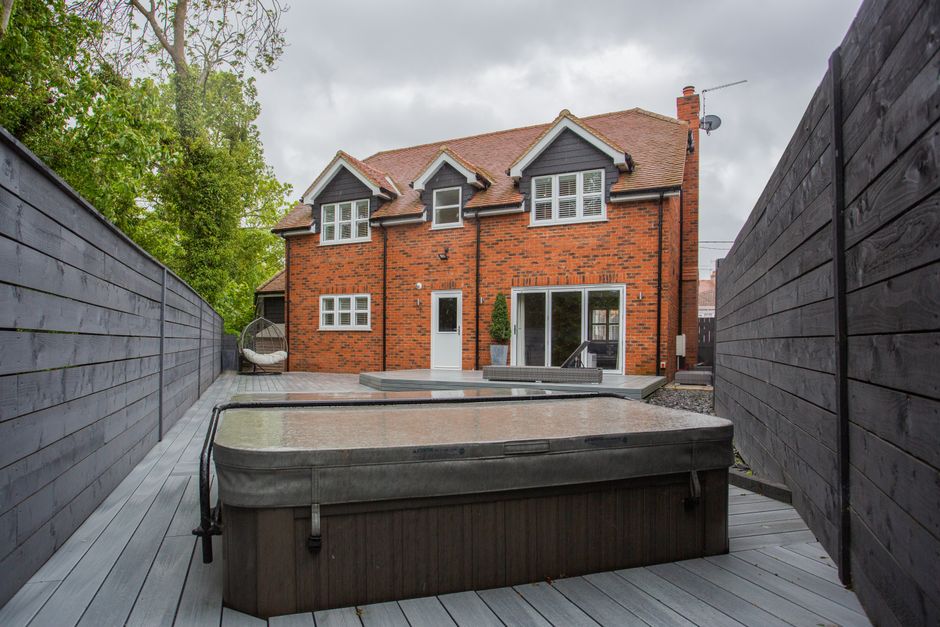
Not all composite decks cost the same. Several things can push your quote higher:
- Site conditions: Does your contractor need to build a new foundation? Clear trees? That adds time and labor.
- Complexity and custom features: Built-in planters, multi-level designs, wraparound layouts, and integrated lighting all drive cost up.
- Railing systems: Aluminum railings (which look sleek and require no maintenance) cost more than basic balusters.
- Material brand and grade: Budget composite runs cheaper; premium brands with better warranties cost more.
- Local permitting and inspections: Kansas City area codes and inspection requirements add time to the project.
- Access and preparation: If your property is hard to reach or needs extensive site prep, labor hours increase.
When you work with PinIt Properties and Construction, LLC on a custom composite deck project, we walk through every one of these factors so you understand exactly where your money’s going.
Understanding the Cost Difference: Material vs. Labor
Here’s something a lot of homeowners don’t realize: labor is the bigger chunk of your bill, not material.
Your material might be $2,000 to $4,000 for a 320 sq ft deck, but labor to install it correctly—framing the substructure, securing all fasteners, building railings, and finishing details—runs $7,500 to $9,000. That’s why cheap contractors can’t really compete. You need skilled carpenters who know composite deck installation inside and out.
Shortcuts with composite decks show up fast: poor fastening leads to movement, uneven surfaces, and premature failure. That’s why choosing an experienced builder matters as much as choosing your material.
How to Control Your Composite Deck Budget
If you’re thinking “that’s more than I planned to spend,” here are some smart ways to manage the cost:
- Start smaller. Build a 12×16 deck now; add on later. It’s easier than you think.
- Choose a mid-range composite brand. You don’t need the absolute premium option to get 25+ years of life.
- Keep the design simple. A rectangular deck costs less than a multi-level, wraparound masterpiece—but both look great.
- Skip the extras initially. Add lighting, built-in seating, and fancy railings after the deck is done.
- Get multiple quotes. Price varies, and you want to find a contractor who balances quality with fair pricing.
One more thing: don’t automatically go with the cheapest bid. PinIt Properties and Construction, LLC has learned the hard way that cutting corners on composite deck installation costs more in repairs and frustration later.
The Long-Term Value of Your Investment

Let’s talk ROI for a second. A composite deck isn’t an expense—it’s an investment in your home and your quality of life.
According to the National Association of the Remodeling Industry’s Cost vs. Value Report, a composite deck recoups a significant percentage of its cost when you sell. Plus, while you own it, you get years of entertaining space, family memories, and zero weekend maintenance projects.
Compare that to a wood deck where you’re pressure-washing, staining, and replacing boards every five to ten years. Over 20 years, the total cost of ownership for composite is actually lower.
Getting an Accurate Quote for Your Project
The best way to know what your composite deck will cost is to get a detailed quote from a local contractor who knows your area’s soil conditions, building codes, and material availability.
Here’s what a solid estimate should include:
- Square footage and material costs broken down by brand/grade
- Labor hours and rate
- Framing, fasteners, and hardware details
- Railing and finishing details
- Permitting and inspection fees
- Timeline and payment schedule
- Warranty on materials and workmanship
When you’re ready to move forward, PinIt Properties and Construction, LLC provides transparent quotes with every detail spelled out so there are no surprises.
Composite Deck Cost FAQs
How much does composite decking material cost per square foot?
Composite material alone ranges from $5 to $14 per square foot depending on the brand and quality level. Budget options run $5–$8/sq ft, mid-range composite is $8–$12/sq ft, and premium brands like Trex are $12–$14/sq ft (material only). Installation labor adds another $23.50–$28.75/sq ft on top of that.
Is a composite deck more expensive than a wood deck?
Yes, composite costs significantly more upfront—usually 50% to 100% more than pressure-treated wood. However, when you factor in 20+ years of maintenance (staining, sealing, replacing warped boards), composite actually costs less over time. Plus, you get a deck that requires almost zero maintenance and lasts decades longer.
Can I save money by building a composite deck myself?
We’d be honest: unless you’re an experienced carpenter, DIY isn’t the best option here. Composite decks demand precise installation, proper fastening, and structural knowledge to avoid sagging, movement, and premature failure. The labor savings aren’t worth the risk. Hire a pro.
What’s included in the total cost of a composite deck?
The installed price covers composite boards, fasteners, hardware, substructure and framing, labor, and finishing work. It usually does NOT include optional add-ons like aluminum railings (extra), built-in lighting (extra), or site prep (varies). Always confirm what’s included before you commit to a quote.